Metabolism
Sermorelin for women: what it can and can't do in midlife
Sermorelin for women: what it can and can't do in midlife

Best Telehealth Platform for Clinical Support
by U.S. News & World Report 2026–2027
Sermorelin for women: what it can and can't do in midlife
Sermorelin for women: the short answer
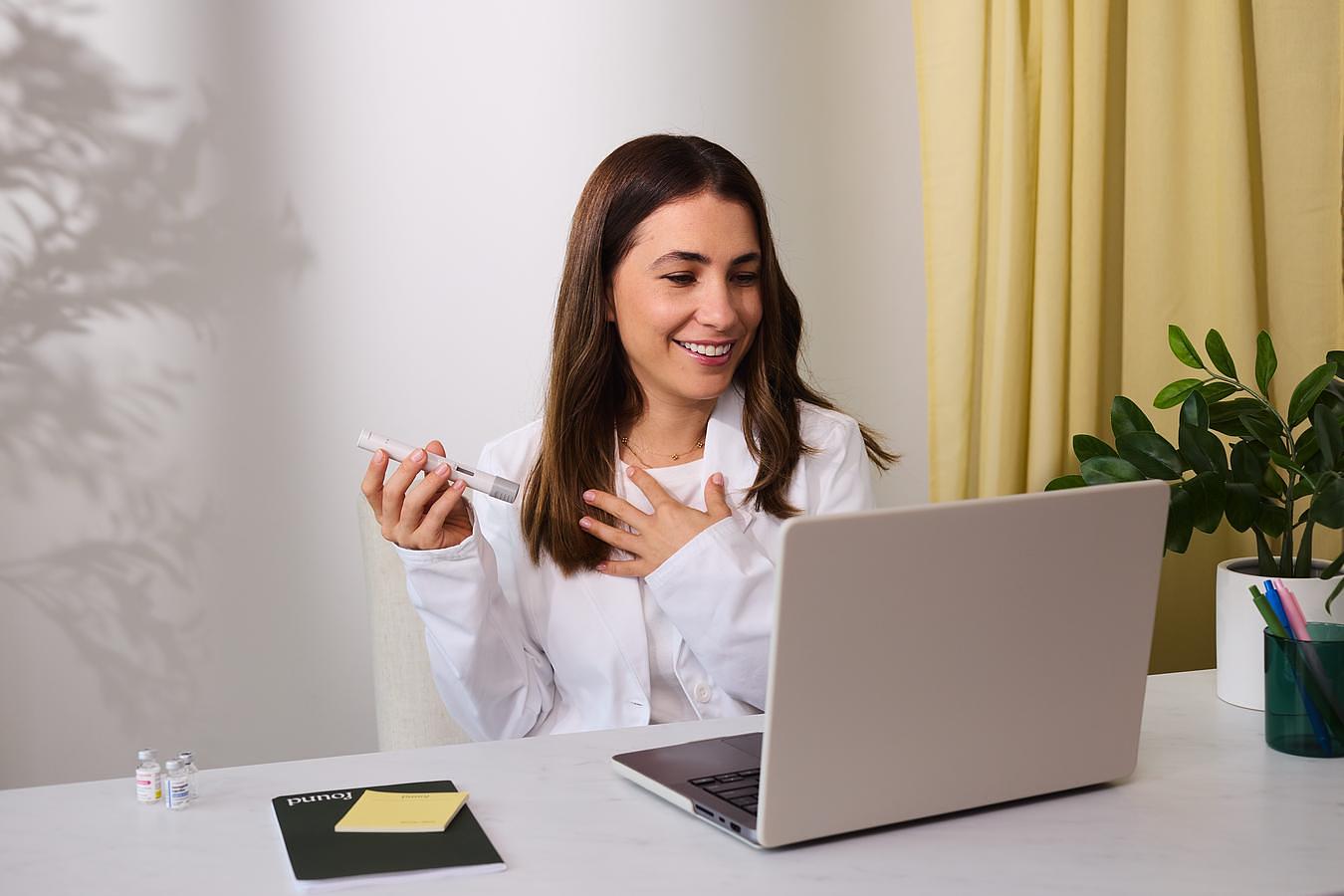
Sermorelin is a prescription peptide that prompts your pituitary gland to release more of your body's own growth hormone. Women usually ask about it for sleep, energy, body composition and skin in their 40s and 50s. Human studies show it can raise growth hormone and IGF-1 levels, but research in healthy midlife women is still limited. The one trial we found that split results by sex, using a closely related analog, saw most of the body changes in men, not women. Sermorelin doesn't replace estrogen or treat menopause symptoms.
If you've landed here, your body has probably changed in ways that don't match the effort you're putting in. Sleep is lighter, recovery is slower, and your shape is shifting. Sermorelin shows up again and again in that search, often with big promises attached.
Here's what matters: what we know, what we don't, and how to decide whether it's worth a conversation with your clinician.
How does sermorelin work?
Sermorelin is a lab-made version of growth hormone releasing hormone (GHRH), the signal your brain uses to tell the pituitary to make growth hormone. According to USADA's sermorelin guidance, the U.S. Anti-Doping Agency describes it as a synthetic peptide that mimics GHRH and stimulates the pituitary to increase natural growth hormone production. Because it nudges your own system instead of supplying the hormone directly, it's called a secretagogue.
Sermorelin isn't new. The FDA approved it under the brand name Geref in 1990 for testing pituitary function and in 1997 for children with growth hormone deficiency. The manufacturer discontinued it in 2008, and FDA's Geref determination found the product wasn't withdrawn for reasons of safety or effectiveness. Today, sermorelin is available through compounding pharmacies with a prescription.
Peptides work like signals, and your GLP-1 is a peptide too. But a signal only helps if the system receiving it is ready. Dr. Rekha Kumar, Found's Senior Medical Advisor, calls peptides "a signal enhancer," which is why sleep, protein and strength training come first. For a deeper look at the different levels of proof behind peptides, see how peptide therapy evidence differs.
Why does growth hormone matter in midlife?
Growth hormone helps regulate muscle, fat, bone and repair. It also fades with time. An NIH-hosted Endotext review notes that growth hormone declines with age, falling about 15% per decade after your 20s.
That decline is an association, though. The same review says aging by itself isn't a reason to test for or treat growth hormone deficiency, and researchers still don't know whether lower growth hormone causes the body changes that come with age.
For women, this quieter decline overlaps with a much louder one. Estrogen and progesterone shift during perimenopause, which affects muscle, belly fat, insulin sensitivity and sleep. Perimenopause changes the math, and it's often the bigger driver of the weight changes in perimenopause that bring women to sermorelin in the first place.
What does the research show for women?
Research on sermorelin in healthy midlife women is still limited. The clearest data on women comes from a 1997 trial in older women and men, published in the Journal of Clinical Endocrinology & Metabolism.
The study was small: 10 women and nine men aged 55 to 71, who used a nightly injection of a GHRH analog closely related to sermorelin for 16 weeks. It's still the only trial we found that reported results for women separately. No trials in perimenopausal women turned up.
Hormone levels and body composition
Growth hormone and IGF-1 rose in both women and men. But the authors found that gains in lean body mass, insulin sensitivity, well-being and libido "occurred in men but not in women." Women saw no drop in body fat and no change in sleep quality.
There's an important caveat. Eight of the 10 women were taking oral estrogen, and the authors suggested it may have blunted the effects. That leaves a real open question about how women not on hormone therapy might respond.
What it means for you: sermorelin isn't a weight-loss medication. If weight and metabolic health are your main goals, GLP-1 care has far stronger evidence. For women in perimenopause who want a gentler start, Found's microdosing program offers lower-dose, clinician-guided GLP-1 care.
Skin and your face
Skin is the one body change women shared with men in that trial. Skin thickness increased in both sexes over 16 weeks.
Thicker skin isn't the same as fewer wrinkles, and the study was small and short. It's a reasonable thing to be curious about, but it isn't a reason to expect visible facial changes.
Bone and muscle
Bone is a real concern in midlife. The Bone Health & Osteoporosis Foundation reports that bone loss after menopause can reach up to 20% of a woman's bone density in the five to seven years that follow, though the pace varies from woman to woman.
The 1997 trial found no change in bone mineral density in either sex. So sermorelin and related analogs shouldn't be counted on to protect bone. Resistance work, enough protein and, for some women, hormone therapy have better support. Our guide to strength training during menopause covers where to start.
Does sermorelin raise estrogen?
There's no evidence that sermorelin raises estrogen. It acts on the growth hormone pathway, not on your ovaries.
That's the key difference between sermorelin and hormone replacement therapy (HRT). When women ask which medications increase female hormones, the answer is estrogen and progesterone therapy, prescribed for perimenopause and menopause symptoms.
| Sermorelin | HRT | |
|---|---|---|
| What it does | Prompts the pituitary to release more of your own growth hormone | Replaces the estrogen and progesterone that decline in perimenopause and menopause |
| Main reason it's prescribed | Growth hormone support | Hot flashes, night sweats, broken sleep, vaginal dryness and other menopause symptoms |
| Evidence in midlife women | Limited; one small sex-split trial | Well established for menopause symptoms |
| Raises estrogen? | No | Yes |
| Typical form | Injection, usually at bedtime | Creams, capsules, patches or tablets |
The two aren't interchangeable, and one doesn't cancel the need for the other. If your symptoms are hot flashes, 3 a.m. wakeups or mood swings, Found's Hormone Care is built for that. And if you're already on weight care, here's what to know about taking a GLP-1 with HRT.
How long does sermorelin take to work?
There's no reliable timeline for how women will feel on sermorelin. In the 1997 trial of a related analog, IGF-1 levels rose early, stayed up through week 12, and drifted back toward baseline by week 16.
That's a lab number, not a promise about sleep or energy. Some women notice changes, and some notice very little. Your clinician sets expectations up front, checks in on how you're doing, and stops treatment if it isn't helping.
How is sermorelin dosed for women?
There's no standard female protocol. A licensed clinician decides whether sermorelin fits, and at what dose, after reviewing your health history, labs, goals and everything else you take.
Sermorelin is usually given as a small injection at bedtime. Be wary of any clinic that quotes you a dose before it has looked at your history.
What are the side effects of sermorelin?
For the original approved product, the more common side effect was pain, redness or swelling where the shot went in. According to Geref side effect information from Drugs.com, rarer effects included flushing, headache, dizziness, sleepiness and trouble swallowing.
Long-term safety data in healthy adults is limited. Where your sermorelin comes from also matters. Many peptides sold online are labeled "research use only," which means no one has checked what's in the vial or whether it's right for you.
Prescription sermorelin today is compounded. The FDA states that compounded drugs aren't FDA-approved and that it doesn't review their safety, effectiveness or quality before they're sold, as explained in FDA on compounded drugs. That's why the pharmacy's licensing, outside testing and a clinician's oversight carry so much weight.
Who shouldn't take sermorelin?
Sermorelin isn't right for everyone. Talk with a clinician before starting if any of these apply:
- Pregnant or trying to conceive: Peptide medications generally need a careful risk review first.
- Competitive athletes: Sermorelin is prohibited in sport, so it's off the table if you're tested.
- Complex health history: Your clinician needs your full medication list and history to judge whether it fits.
- Symptoms with another cause: Fatigue and poor sleep can come from thyroid problems, low iron, sleep apnea or menopause itself.
A good clinician looks at those first. Sometimes the right recommendation is a different treatment, or no peptide at all.
How to get sermorelin with Found
Sermorelin is on Found's WellnessRx list, and you can join the WellnessRx peptide waitlist for first access. Before anything is prescribed, a Found clinician reviews your history, goals and everything you already take.
If sermorelin fits, a state-licensed compounding pharmacy prepares it, and an outside lab tests every batch for sterility and endotoxins before it ships. Your care team stays with you and adjusts your plan as your body responds. Found members get member pricing, about 20% off.
You're not starting from zero. If you're already in weight care with us, your clinician can look at weight, hormones and peptides together, on one plan.
Compounded medications are not FDA-approved. A Found clinician reviews each person's history before prescribing. Prescriptions are provided only if clinically appropriate. Individual results may vary.
Sermorelin for women FAQs
Still have questions? Here are the ones women ask most. Your clinician is always the best person to talk through what fits your body.
Is sermorelin FDA-approved?
Not currently. The FDA-approved version, Geref, was discontinued in 2008, and the sermorelin prescribed today is compounded, which means it isn't FDA-approved.
Will sermorelin make me gain weight?
In the 1997 trial of a related GHRH analog, body weight didn't change in women or men. Sermorelin isn't a weight-loss treatment either, so talk to your clinician about GLP-1 care if weight is your main goal.
Can women take sermorelin and ipamorelin together?
Ipamorelin is a separate peptide with limited human safety data, and Found doesn't offer it. Whether any combination makes sense is a decision for your clinician after a full review.
Is sermorelin right for perimenopause?
We found no trials of sermorelin in perimenopausal women, and it doesn't treat perimenopause symptoms. It may still come up when you and your clinician talk about sleep, energy or body composition, alongside options like HRT.

Get the best of Found right in your inbox
Get started with Found
Ready to lose weight and live your healthiest life?
Published date:
November 19, 2026

Sources