Get relief from
night sweats.
Personalized hormone therapy, prescribed online, with ongoing clinician support and dose adjustments.
Estrogen cream + progesterone
Clinician visits billed to your plan
2 minute quiz · Start in days · Cancel anytime
In-network insurance coverage for 200M+ people



Care protocols designed by Rekha B. Kumar, MD, MS
Triple board-certified endocrinologist · Head of Medical Affairs, Found
A licensed clinician reviews your intake, prescribes what fits your history, and adjusts your dose over time
Hormone care and metbolic care from one clinician, on one plan, if you ever want both
Sound familiar?
Hot flashes, broken sleep and mood changes have a cause and a treatment.
of women were told their symptoms were "normal aging."¹
And they're treatable.
One price, at every dose.
Your clinician can adjust your dose any time; the price doesn't move. With insurance, visits bill to your plan and the medication is one flat price. Without insurance, the visit is included.
Estrogen + progesterone
Billed monthly. Your clinician visits are billed to your plan. In-network with most plans (over 200M+ covered).
Estrogen + progesterone
Billed monthly. Clinician visits, messaging, dose adjustments and shipping, all in one price. No membership fee.
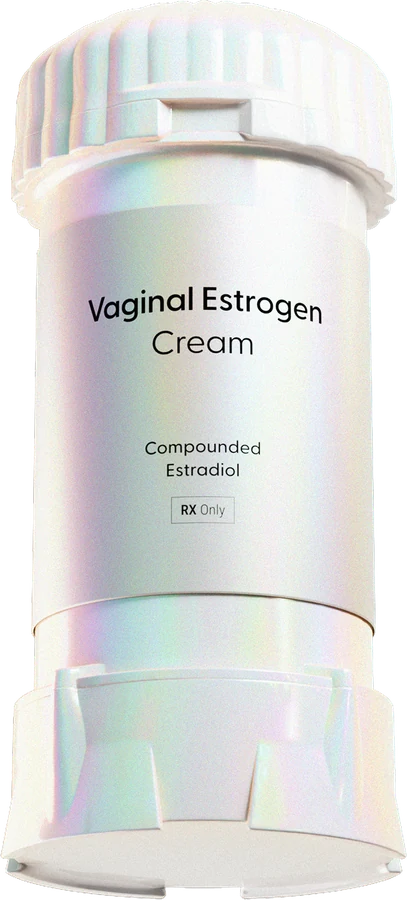
Add vaginal estrogen cream to your plan
Targeted pelvic care for dryness, irritation and painful sex, added by the same clinician who manages the rest. Billed as a 3-month supply.
With insurance
Without insurance
Individual product pricing
One product on its own
Standalone prices. Your clinician decides what fits.
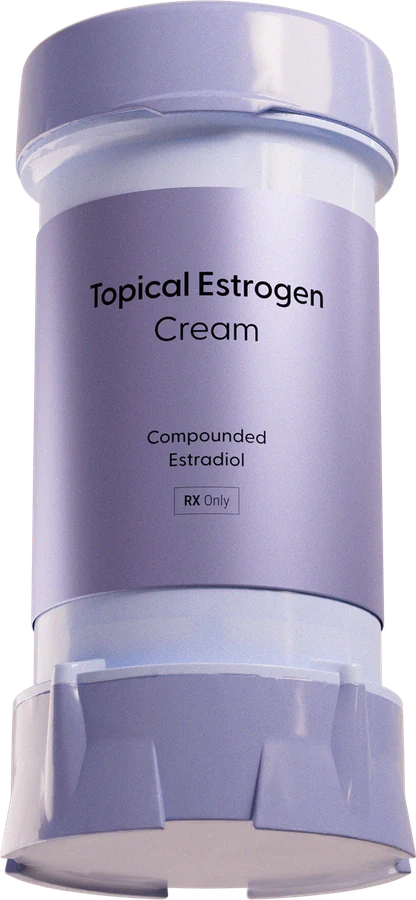
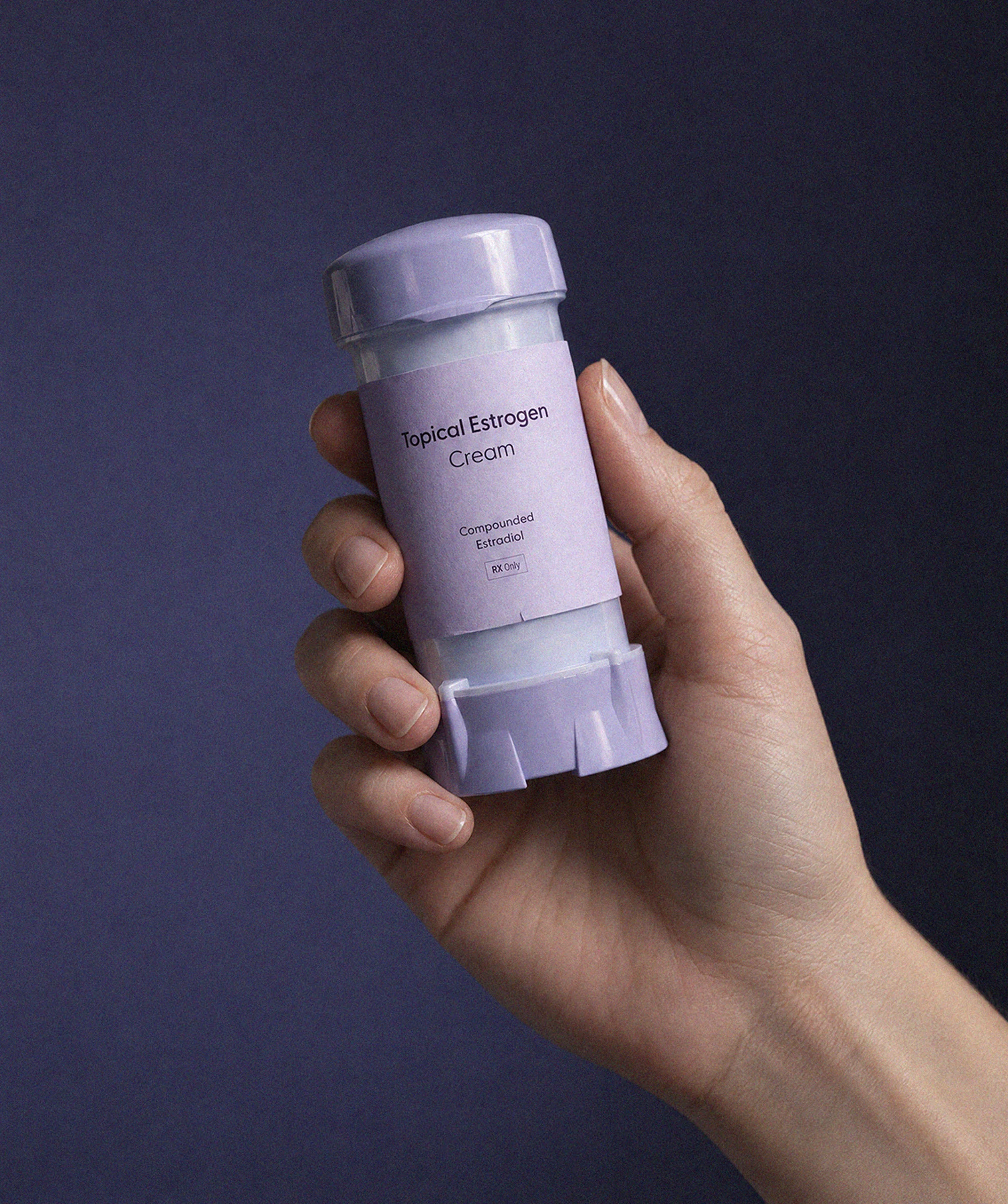
Topical estrogen cream
With insurance
$49/mo
Without insurance
$89/mo
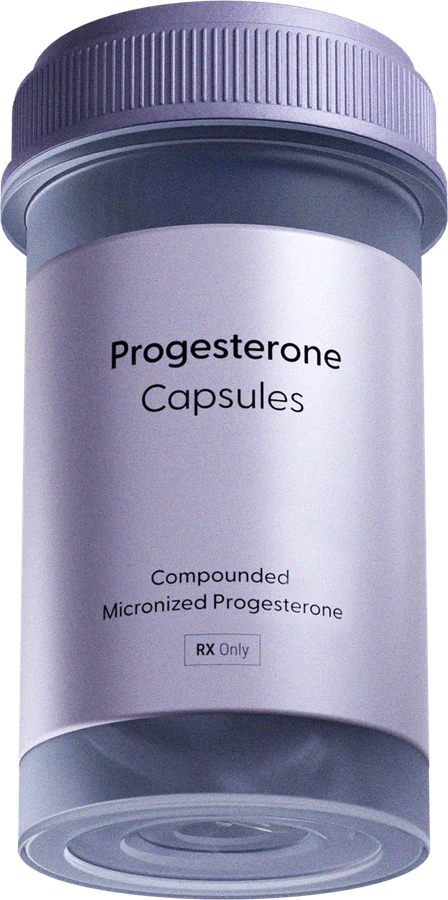
Oral progesterone capsules
With insurance
$49/mo
Without insurance
$89/mo
Vaginal estrogen cream, 3-month supply
With insurance
$79 per 3 months (about $26/mo)
Without insurance
$119 per 3 months (about $40/mo)

How it works. Start in days.
Two-minute assessment
Your symptoms, history and goals. No labs needed to start.
A clinician reviews it
Menopause-trained, by video or text. The visit is billed to insurance or included in your price.
Your prescription ships
If prescribed, bioidentical estradiol and progesterone ship from a licensed US pharmacy.
Ongoing care
Message your clinician, adjust the dose, check in. Your plan changes as your body does.
It's one hormonal shift, showing up everywhere.
Belly fat, broken sleep, a shorter fuse: not separate problems to fix one at a time. Estrogen falls through perimenopause and the body notices in a dozen places at once. Hormone therapy replaces what dropped, so the symptoms are treated at the root.
"I don't treat a checklist of symptoms. I treat the shift underneath them."
Dr. Rekha Kumar
Estrogen through the 40s and 50s, illustrative
For illustration only; your pattern will differ.

Weight was never just about weight.
Hormones, sleep and metabolism shape how your body holds weight. Found treats the whole picture: your hormones and your weight care, one clinician, one plan.
"Midlife weight is hormonal before it's anything else. Treat the shift, and the rest gets easier."
Dr. Rekha Kumar

The weight connection
Falling estrogen changes where your body holds weight, how it sleeps and how it recovers. Treat the shift first. If weight care joins your plan later, the same clinician manages both.
more weight lost when menopausal women on a GLP-1 added hormone therapy, in a Mayo Clinic study²
Observational, 120 women on tirzepatide, 12+ months. Association, not proof of cause. Individual results vary.

Most women notice a difference within weeks.³
Weeks 2 to 4
Sleep, night sweats, mood
Weeks 4 to 8
Energy, brain fog
Month 3 and on
Your clinician fine-tunes the dose
"Sleep usually comes back first. Then the rest follows, and we adjust as we go."
Dr. Rekha Kumar
Your response will depend on your symptoms, treatment and individual health.

Yes, it's safe for most women. Here's what changed.
The 2002 Women's Health Initiative study used older hormones in older women, started them late and misread its own data. On November 10, 2025 the FDA removed the boxed warnings for cardiovascular disease, breast cancer and dementia from systemic menopausal hormone therapy.⁴
Hormone therapy is not right for everyone. A Found clinician reviews your history and your risks before anything is prescribed.
Full risk informationHow the thinking changed
The Women's Health Initiative study ties hormone therapy to risk. It studied older women, on older hormones, started years after menopause.
Menopause guidelines settle on the window: for most healthy women who start within 10 years of menopause or before 60, benefits outweigh risks.
November 10: the FDA removes the boxed warnings for cardiovascular disease, breast cancer and dementia from systemic hormone therapy.
"The fear came from one study, done badly. For a healthy woman within ten years of menopause, the benefits are real and the risks are small. We'll go through yours together."
Dr. Rekha Kumar
Your plan, prescribed for your symptoms.
A Found clinician prescribes what fits your symptoms and history. Most plans use two or three of these medications.
Topical estrogen cream
Bioidentical estradiol
Applied to the skin daily. For hot flashes, night sweats, sleep, mood and bone.
Oral progesterone capsules
Micronized progesterone
Taken at night. Protects the uterine lining when you take estrogen, and many women sleep better on it.
Vaginal estrogen cream
Bioidentical estradiol, local
For dryness, irritation and painful sex. Prescribed as a three-month supply, on its own or added to your plan.
Compounded medications are permitted to be prescribed under federal law, but are not FDA-approved and the FDA has not reviewed them for safety, effectiveness or quality. Prescription subject to clinician review and clinical eligibility.
Rekha B. Kumar, MD, MS
Head of Medical Affairs, Found
Who's behind your care
Your treatment follows protocols designed by a triple board-certified endocrinologist
Board certified in internal medicine, endocrinology, and obesity medicine
Associate Professor of Clinical Medicine at Weill Cornell Medicine in New York City
First medical director of the American Board of Obesity Medicine
Medical Advisory Board member at Let's Talk Menopause
"Menopause is a hormonal transition, and it deserves the same rigor as any other medical condition. Every protocol our clinicians follow is built on the evidence I'd want for my own patients."
Dr. Kumar has discussed hormonal care on:
TODAY
CBS Sunday Morning
NBC News
The goop Podcast
The Martha Stewart Podcast
Dr. Kumar is a Found employee. Institutional affiliations are listed for identification only and do not imply endorsement
Answers from Dr. Rekha Kumar
Is HRT safe? Isn't there a cancer risk?
There's a lot of outdated fear around hormone therapy. For most healthy women who start HRT before age 60 or within 10 years of menopause, modern HRT is not only safe, it carries real benefits for bone, heart and brain health. Because every woman's history is different, a Found clinician will help you understand your individual risks and choose the right treatment for you.
I thought a study confirmed HRT causes cancer?
The 2002 Women's Health Initiative study used outdated hormones, started them at the wrong time and analyzed the data incorrectly. Today, using bioidentical hormones at the right time, closer to menopause, makes HRT safe for most women with very low risk. Your clinician will walk through what it means for you.
How do I know if I'm in perimenopause?
Perimenopause is a transition, not a switch, and no single test confirms it. Your hormones fluctuate through this stage, so a clinician diagnoses it from your story: changes in your cycle, symptoms that are new for you, your age, and anything like hormonal birth control or a hysterectomy that changes the picture.
How do I know if I'm in menopause?
Menopause is one milestone: 12 consecutive months without a period, with no other explanation. Everything after that is postmenopause. If your periods stop before 45, and especially before 40, it's worth talking with a clinician.
Is there a right time to start?
There's an ideal window. Starting hormone therapy within about 10 years of menopause and before age 60 is linked to the greatest benefit and the lowest risk. If you're wondering whether now is your window, a Found clinician can help you figure it out.
What can I expect after starting?
Many women notice symptom relief within weeks: better sleep, steadier mood, fewer hot flashes. Your clinician sets expectations for your plan and adjusts as your body responds.
What are the side effects?
Like any treatment, HRT can have side effects, which may include breast tenderness, bloating or mood changes, usually mild. You'll talk through your history and any concerns with a Found clinician before starting, and they'll stay with you to adjust as needed.
Do I need blood tests?
No. There is no single test that confirms perimenopause, and your levels can look completely different two weeks apart. Your clinician diagnoses from your symptoms and history and orders labs only if something in your story calls for them.
I had a hysterectomy, or I have an IUD. Does that change things?
It changes what your clinician prescribes, not whether you can be treated. Without a uterus you may not need progesterone; with a hormonal IUD the plan is built around it. Tell your clinician in the assessment.
Do I need insurance?
No. If your plan is in-network we bill your visits to it and you pay the medication price. If not, or if you would rather not use it, the cash price includes everything.
How much does it cost?
With insurance: your visits are billed to your plan and the medication is $79 a month for estrogen and progesterone, or $49 a month for either alone. Without insurance: $119 a month for both or $89 for either alone. Vaginal estrogen cream is $79 for a three-month supply with insurance or $119 without, and $20 less when added to another treatment. Everything is HSA/FSA eligible.
I'm already on a GLP-1. Why add HRT?
A GLP-1 targets appetite, weight and metabolic health. HRT treats the symptoms of perimenopause and menopause and protects bone. In two Mayo Clinic studies, postmenopausal women on a GLP-1 who also used hormone therapy lost about 35% more weight than women on the GLP-1 alone. Those studies were observational, so they show an association rather than a cause.
How do I know if HRT is right for me?
Start with a quick assessment. A Found clinician reviews your symptoms, history and goals, and tells you whether HRT makes sense, on its own or alongside the rest of your care.
Which states do you serve?
[State availability from ops]
Can I cancel?
Yes. Adjust or cancel anytime, and you get a full refund if you're not clinically eligible.

If your body changed, your care should too.
Two minutes to see whether hormone therapy belongs in your plan. A clinician reviews it in days.
See if HRT is right for youTakes 2 minutes · Start in days · Cancel anytime
Important safety information
[ISI block from clinical and legal: risks, contraindications, who should not take estrogen or progesterone, and a link to full prescribing information.]
Compounded medications are prepared by a licensed pharmacy for an individual patient and are not FDA-approved; the FDA has not reviewed them for safety, effectiveness or quality. Prescription subject to clinician review and clinical eligibility. Hormone therapy is not FDA-approved for perimenopause and may be prescribed off-label at a clinician's discretion. Not available in all states.
1. Found in-app survey, 300 women on GLP-1 therapy, 235 completed, August 2026.
2. Observational study of 120 postmenopausal women on tirzepatide; women also using hormone therapy lost about 35% more weight over 12+ months. Association, not proof of cause. Individual results vary.
3. Your response will depend on your symptoms, treatment and individual health.
4. FDA, November 10, 2025: boxed warnings for cardiovascular disease, breast cancer and dementia removed from systemic menopausal hormone therapy. Hormone therapy is not right for everyone; a clinician reviews your history.

From $79/mo
visits billed to insurance